

Commensalis Whale Memorial
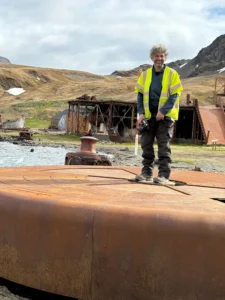 In Grytviken, where the South Georgia Museum is located, we have installed a memorial to the thousands of whales that were killed during the first half of the 20th century, when South Georgia was at the center of the Antarctic whaling industry in hopes that global awareness will prevent mass whaling in the future.
Why a whale memorial?
Humans hunted whales for their oil, an essential commodity used to make everyday products like soap and margarine, but also lubricants, explosives and a vast range of products.
The Whale Memorial graphically shows the huge numbers of whales that were slaughtered for processing and oil extraction. Whale populations were decimated and species such as the Blue Whale were pushed to near-extinction. Due to slow reproduction rates, it has taken many years for whale numbers to recover post-whaling.
Why does the memorial matter?
The memorial is a reminder of our insatiable hunger for resources at any given cost.
Healthy oceans are essential for life on Earth. Our own health and survival are closely linked to the ocean’s well-being. The whale memorial reminds us of our responsibility to protect the sea and ensure a healthier future for all life.
Are whales still in danger?
Thankfully, commercial whaling at South Georgia ended in the mid-1960s and now the island’s waters are safeguarded within one of the world’s largest Marine Protected Areas.
Today, whales and other marine life face threats such as rising ocean temperatures, over-fishing of their food sources, microplastic pollution, noise pollution and collisions with vessels.